A healthy tree adds shape, value, and curb appeal to your property. A dying tree does the opposite. It can drop heavy limbs without warning, damage your roof or car, and become a serious safety risk during Rochester's wind, ice, and snow storms.
The good news is that dying trees rarely fail overnight. Most show warning signs for months or even years before they come down, and once you know what to look for, those signs are easier to spot than you might think. Catching them early gives you options, like pruning or treatment, before a sick tree turns into an emergency or a dangerous tree removal job after a storm.
The easiest way to check a tree is to work your way down, starting with the canopy and ending at the roots. But first, a quick note on timing.
Is Your Tree Dying or Just Dormant?
In late fall and winter, almost every deciduous tree looks bare and lifeless, so it's easy to mistake a dormant tree for a dead one. The difference is in the details. A dormant tree still has flexible twigs, healthy buds, and live green tissue under the bark. A dead tree has brittle branches that snap cleanly and no buds at all.
If you're not sure about a branch, try a simple scratch test. Use your fingernail or a pocketknife to scrape a small bit of bark off a twig. Green, moist tissue underneath means that part of the tree is alive, and brown, dry tissue means it's dead. It won't tell you everything about the tree's overall health, but it's a quick way to check a suspicious limb in any season.
Start at the Top With Canopy Warning Signs
The canopy is often where the first signs of a dying tree show up. A healthy tree keeps a full crown of leaves through the growing season. A tree that produces fewer leaves each year, or has leaves that brown and wilt in midsummer, is likely under serious stress. Timing is another clue. If your tree changes color weeks earlier than others of the same type nearby, something may be wrong below the surface.
Dead branches are one of the most common warning signs. These are limbs that stay bare during the growing season, snap easily, or have bark shedding off. A few dead twigs here and there are normal, but dead large limbs are a different story. Arborists often call them "widowmakers" because they can fall at any time, especially in high winds. If they're hanging over your house, driveway, or a spot where your kids play, they shouldn't wait.
Move Down to Warning Signs on the Trunk
The trunk carries the weight of everything above it, so structural problems here tend to be the most serious. Deep vertical cracks or splits are a major red flag, since they create weak points that can give way under snow, ice, or a heavy summer canopy. Trees with a tight V-shaped fork between two main trunks are especially likely to split right down the middle.
Bark can tell you a lot too. It protects a tree the way skin protects us, so large patches of missing or loose bark, or sunken dead areas called cankers, can mean the tree is diseased or dying underneath. Holes and hollow spots deserve a closer look as well. Small cavities aren't always a problem, but large ones mean part of the interior has rotted away, and that loss of strength makes the tree more likely to snap. If the trunk sounds hollow when you tap it, or animals are nesting inside, it's worth having it checked.
Check the Base and Roots at Ground Level
Some of the most important warning signs are the easiest to overlook because they're at your feet. Mushrooms, shelf-like growths called conks, or other fungus at the base of a tree usually point to internal rot. By the time fungus shows up on the outside, decay is often well underway on the inside, weakening the tree where you can't see it.
Next, look at how the tree is standing. Plenty of trees grow at a natural angle and are perfectly stable, so what you're watching for is a lean that's new or getting worse. Cracked, heaving, or lifted soil on one side of the base suggests the roots are failing and the tree could be at risk of uprooting.
Root damage in general is a slow but serious threat. Construction, trenching, driveway work, and compacted soil can injure roots and starve a tree over several years. If you notice a thinning canopy a season or two after digging nearby, or see dead and decaying roots near the surface, the two are likely connected.
Tree Pests and Diseases Common in the Rochester Area
Sometimes the cause of a tree's decline is an insect or disease. In Western New York, a few are worth knowing by name.
Emerald ash borer has killed ash trees throughout the state. Watch for these signs of an infested tree.
- Small D-shaped exit holes in the bark
- Heavy woodpecker activity from birds feeding on the larvae
- Thinning at the top of the canopy
- New shoots sprouting from the lower trunk
Ash trees become brittle as they die, which makes removal more dangerous the longer it's put off.
Other trees face their own threats. Beech leaf disease causes dark striping between the veins of beech leaves and gradually thins the canopy. Oak wilt has been confirmed in several parts of New York. It causes oak leaves to discolor along their edges and drop suddenly in summer, and it moves fastest through red oaks. Because beetles can carry it to fresh cuts, the New York State DEC recommends pruning oaks only from October through February, when the beetles are inactive. Maples can develop verticillium wilt, where branches die off one section at a time. Many of these diseases can spread to nearby trees, so identifying them early protects the rest of your yard.
When Is a Tree Dangerous Enough to Remove?
Not every sick tree has to come down. Plenty can be saved with pruning, treatment, or cabling, especially when problems are caught early. But there's a point where removal becomes the safer choice. That usually happens in situations like these.
- More than half the tree is dead or damaged
- The trunk has major cracks, cavities, or rot
- The roots are failing and the tree has started to shift
A tree leaning toward your home, another structure, or power lines raises the stakes considerably. A tree that's partially fallen or hanging after a storm needs attention right away.
When a tree is close to your house, it's always better to have it evaluated before it becomes an emergency rather than after. The Woodeez Tree Service team can help you weigh whether a tree is worth saving or whether removal is the safest move for your property.
Why Dangerous Tree Removal Isn't a DIY Job
It can be tempting to grab a chainsaw and handle it yourself, but removing a dying tree is one of the riskiest jobs around a home. Dead and decaying wood is unpredictable. A weakened tree can split, twist, or fall in a different direction than expected, and brittle limbs can break off while you're working beneath them. Add a nearby roof, fence, or power line, and a small mistake gets expensive fast. At Woodeez, our professional crews use rigging, climbing gear, and specialized equipment to take down trees in controlled sections, keeping both people and property safe.
What to Expect From a Tree Inspection in Rochester
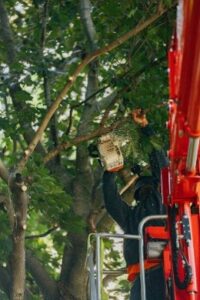
If you've noticed any of these warning signs, a professional tree inspection is the best next step. A trained eye can catch internal decay, structural weaknesses, and pest problems that are easy to miss from the ground. When Woodeez inspects a tree, we start by walking around it to check the canopy, trunk, root zone, and surrounding soil. We also look at what's nearby that could be hit if the tree or a limb were to fall. From there, you'll get an honest recommendation, whether that's pruning, treatment, monitoring, or removal, along with a quote for any work needed.
Timing matters too. Fall is an especially smart time to schedule a tree inspection in Rochester, since snow and ice put extra weight on weak limbs all winter long. It's also worth having trees checked in these situations.
- After a major storm
- Before buying a home with large mature trees
- Anytime you aren't sure whether a tree is safe
Wherever you are in the Rochester area, Woodeez can help you get ahead of problems before they turn into emergencies.
Get Your Trees Checked Before Winter Hits
A tree that's struggling today can become a hazard with the first heavy snow. If something about a tree on your property doesn't look right, Woodeez Tree Service can take a look and help you decide what it needs. We provide tree inspections and removal throughout the Rochester area.
Tree already down or hanging dangerously? Call our emergency line at (585) 352-8733.
Woodeez Tree Service: Care You Can Count On
At Woodeez Tree Service, we’re committed to keeping your trees healthy and your property safe. From trimming and pruning to full removals and storm cleanup, our skilled team handles it all with precision and care. Call us on 585-352-8733 or contact us today, and let’s keep your landscape beautiful and thriving.