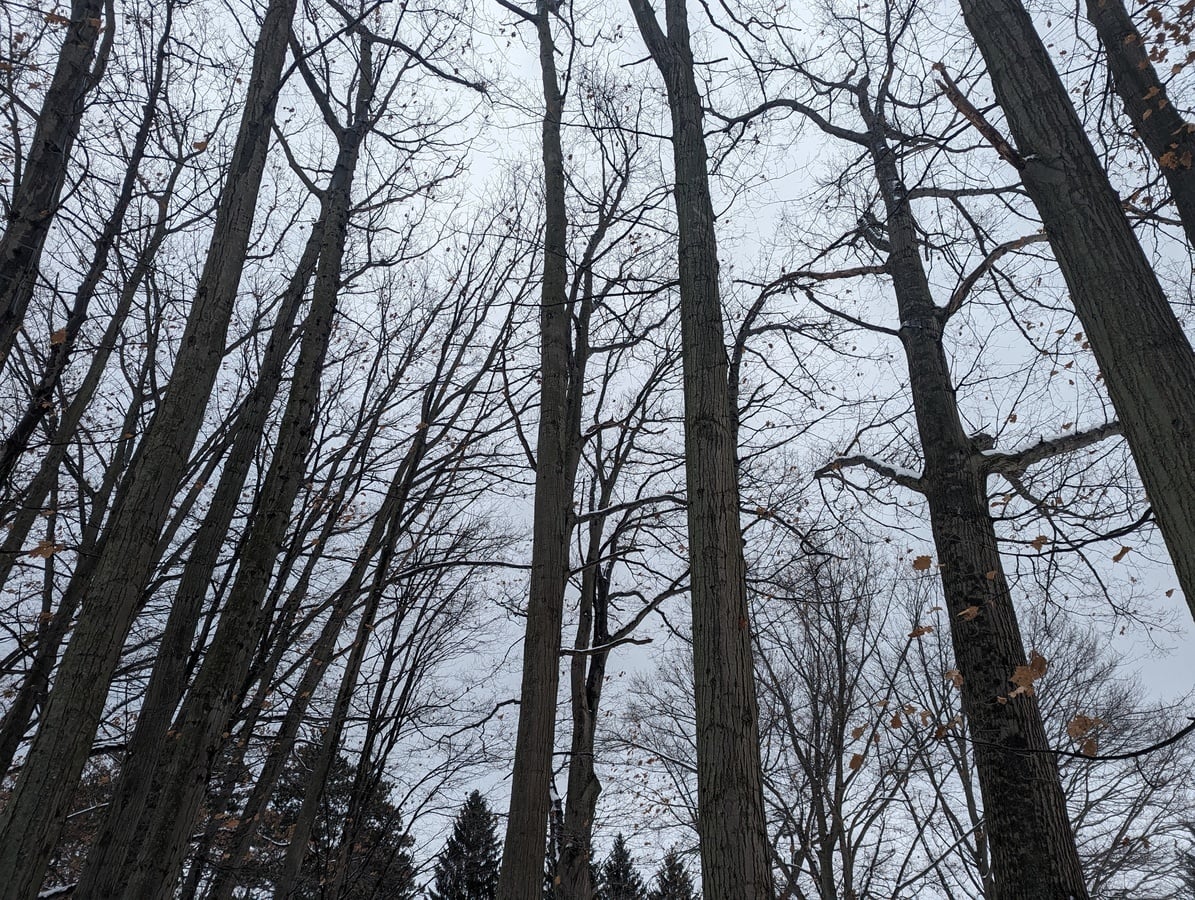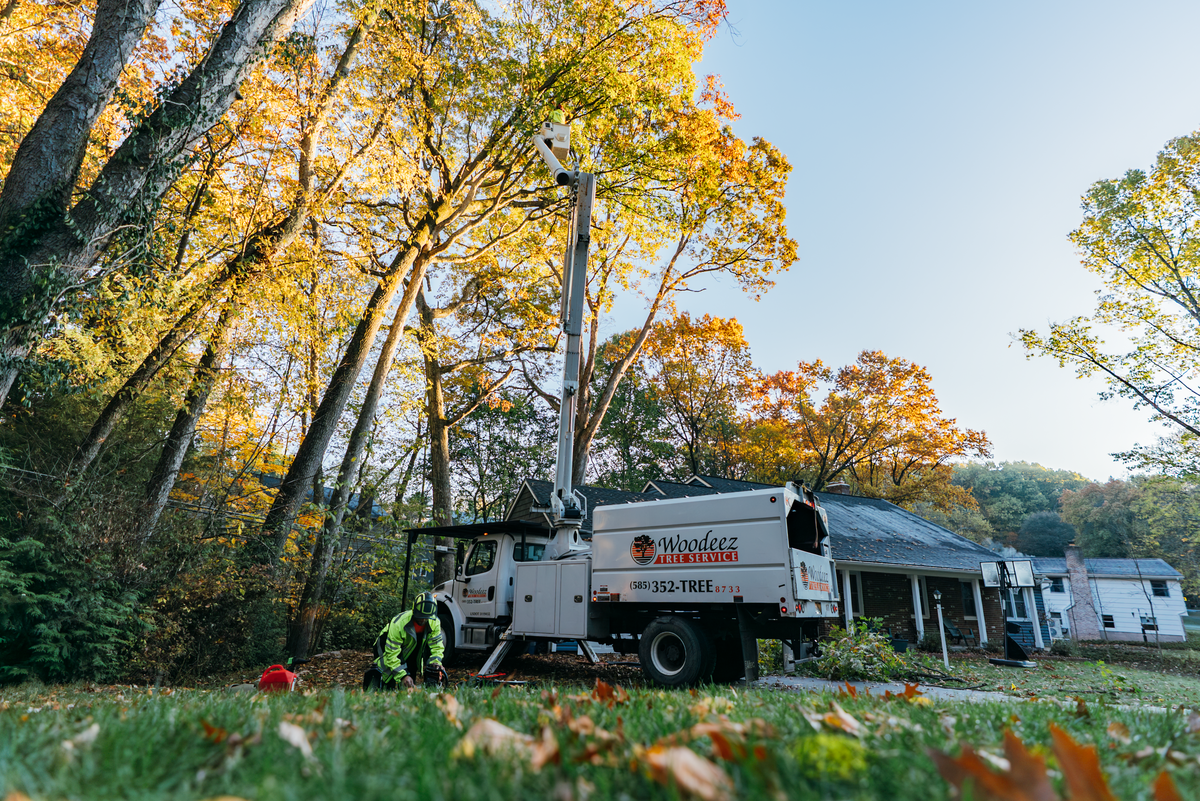
Every fall, plenty of Rochester homeowners look at a tree in their yard and think about taking it down themselves. Maybe it’s leaning a little, dropping full branches, or just blocking the sun. A lot of the time, part of the appeal is the wood. A full-grown tree holds a lot of it, so cutting it down yourself can look like a weekend project that pays you back in free firewood.
Before you look up how to cut down a tree and grab the chainsaw, it’s worth knowing two things. First, not every tree makes good firewood, and even the best firewood to burn isn’t ready right away. Second, taking down a tree is a much bigger and riskier job than it looks. Here’s what you should know about both.
The Best Firewood Trees You Might Have in Your Yard
The best firewood comes from dense hardwoods. Denser wood holds more energy, so it burns hotter and longer and leaves better coals.
- Oak - A mature red or white oak is one of the best firewood trees in the region. Oak burns long and hot, but it’s also one of the slowest woods to dry.
- Sugar maple - Sugar maple, or hard maple, is a common shade tree in older Rochester neighborhoods and a great all-around firewood. It burns hot and steady and splits reasonably well.
- Black locust and honey locust - Both are dense, high-heat woods. Black locust sits near the top of most firewood heat charts, though it can be tough to split.
- Apple and crabapple - Fruit trees are dense and burn hot, and many people like the mild, sweet smell of the smoke.
Is Maple, Birch, Cherry, or Ash Good Firewood?
These species fall in the middle. They won’t match oak or sugar maple, but they’re worth burning once they’re seasoned.
Red maple is lighter than sugar maple and puts out less heat per log. Black cherry burns a little lighter than the top hardwoods but lights easily and smells great. Birch burns moderately well, and its papery bark catches fire quickly. Ash has long been considered good firewood, but many ash trees around Rochester have been killed or weakened by emerald ash borer, an invasive beetle that feeds on and kills ash trees. Dead ash can become brittle and unpredictable, which makes a dying ash one of the riskiest trees to take down yourself.
Is Silver Maple, Poplar, or Pine Good Firewood?
Some of the most common trees in Monroe County yards are also some of the worst for burning.
Silver maple grows fast and gets big, which is why it’s everywhere in Rochester, but the wood is fairly light and puts out noticeably less heat than a sugar maple. Willow, cottonwood, and poplar trees produce soft, lightweight wood that burns quickly and leaves little in the way of coals. Pine, spruce, and arborvitae trees catch fire easily, but they burn fast, tend to produce more smoke, and some, like arborvitae and other cedars, are known for popping and producing sparks.
If the tree you’re thinking about taking down is one of these, the firewood payoff probably isn’t worth the effort.
Get the Best Hardwood Firewood Without the Chainsaw
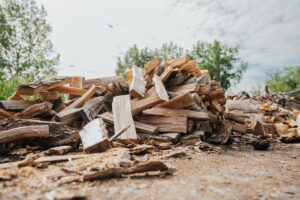
If you’re after firewood from the top of this list, there’s an easier way to get it. Our partners at Rochester Firewood sell only local, sustainably harvested hardwood. Their mix typically includes maple, oak, hickory, beech, cherry, and locust, dense hardwoods that hold their own against the top picks above.
Every load is split to a size that fits the average fireplace and seasoned for a full year before it’s delivered, so it’s dry and ready to burn the day it arrives. Rochester Firewood sells by the face cord and adds 10 to 15% extra to every load at no charge. For fire pits, they also offer rough-cut chunk firewood made from dense hardwoods like oak, maple, and hickory, sold with a three face cord minimum.
In other words, you get the oak and maple you were hoping to pull out of your own yard, without the chainsaw, the splitting, or the year of waiting.
Free Wood Still Has to Become Seasoned Firewood
Even if you have a great firewood species, the wood from a tree you cut down this fall won’t be ready to burn this winter. Freshly cut wood is full of water, and wet wood smokes, hisses, and puts out far less heat. Firewood generally needs at least six months to a year of drying after it’s split and stacked before it’s seasoned, and dense woods like oak often need a full year or more.
Getting it to that point is real work. A trunk turns into heavy rounds that have to be cut to length, split, and stacked somewhere with sun and airflow, away from your house, until they’re fully dry. Wood that’s rotted or hollow from decay won’t burn well no matter how long it sits. And if poison ivy vines are growing up the trunk, that wood should stay out of your fire entirely, since burning poison ivy can cause serious lung irritation.
DIY Tree Removal Is a Bigger Job Than It Looks
Tree work is dangerous, even for people who are comfortable with a chainsaw. A tree doesn’t always fall where you expect it to. Hidden decay, uneven weight, a lean you didn’t notice, or a gust of wind can all send it in a different direction, toward your house, your car, your neighbor’s fence, or you.
The saw itself is a hazard too. Kickback, pinched bars, and limbs that spring back under tension cause serious injuries every year. Dead and declining trees add another layer of risk, since brittle wood can snap or drop branches without warning while you’re working beneath it.
Then there’s everything left after the tree is on the ground. Large rounds are extremely heavy to move, and you’ll always have brush to haul and a stump to deal with.
Leave It to the Professionals
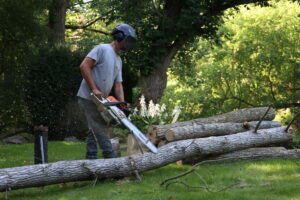
Some trees are simply not DIY projects. Call a professional if the tree is close to your house, garage, fence, or a neighbor’s property, or anywhere near power lines. The same goes for trees that are large, leaning, dead, hollow, or showing signs of decay, and for any job that would require climbing or working off a ladder.
If you’re unsure whether a tree falls into one of those categories, that’s usually a sign it does.
What Happens to the Wood When Woodeez Removes Your Tree
When Woodeez takes a tree down, we handle the cutting, hauling, and cleanup, so you aren’t left with a yard full of rounds and brush. We partner with Rochester Firewood, and the trees we remove are reused in a sustainable way, even when they aren’t suitable for burning.
That partnership doesn’t mean your tree gets split into firewood for your own fireplace. Rochester Firewood seasons its wood for a full year before it’s ready to burn, and not every species meets its standards. If you want firewood for this winter, Rochester Firewood delivers local hardwood that’s already seasoned, split, and ready to go.
Tree Removal in Rochester, NY, Done Safely by Woodeez
Skip the chainsaw, the risk, and the weekend of hauling. Woodeez Tree Service has been taking down trees safely across Spencerport, Rochester, and Monroe County for more than 15 years. Our crews have the equipment and experience to bring down trees in tight spaces, near homes, and over roofs, and we clean up thoroughly when the job is done. We also offer stump grinding, so nothing is left behind. And you don’t pay until you’re 100% satisfied with the work.
Call us at (585) 352-8733 or request a free quote before you take on that tree yourself.
Woodeez Tree Service: Care You Can Count On
At Woodeez Tree Service, we’re committed to keeping your trees healthy and your property safe. From trimming and pruning to full removals and storm cleanup, our skilled team handles it all with precision and care. Call us on 585-352-8733 or contact us today, and let’s keep your landscape beautiful and thriving.